What Is Commercial Real Estate? A Beginner's Guide
Whether you're a first-time investor, a business owner searching for space, or simply curious about the property market, understanding commercial real estate (CRE) is an essential first step. Commercial real estate encompasses a broad range of property types used for business purposes — and it represents one of the most powerful wealth-building vehicles available to investors in the United States today.
At Cordura, we work with buyers, investors, and property seekers across the US market to help them navigate the world of commercial real estate with confidence. This beginner's guide will walk you through everything you need to know — from the basic definition to property types, key terms, and how to get started.
Defining Commercial Real Estate
Commercial real estate refers to any property that is used primarily for business or income-generating purposes rather than personal residential use. This includes office buildings, retail stores, industrial warehouses, apartment complexes, and much more. Unlike residential real estate — which involves single-family homes or small multi-family properties — commercial real estate is typically evaluated based on its ability to generate rental income or appreciate in value over time.
The distinction matters because commercial properties are governed by different financing structures, lease agreements, zoning laws, and valuation methods than their residential counterparts. This complexity is also what makes CRE such a compelling and potentially lucrative asset class for sophisticated investors.
Types of Commercial Real Estate
One of the first things beginners need to understand is that "commercial real estate" is an umbrella term that covers several distinct property categories. Each type has its own risk profile, return potential, and market dynamics.
1. Office Space
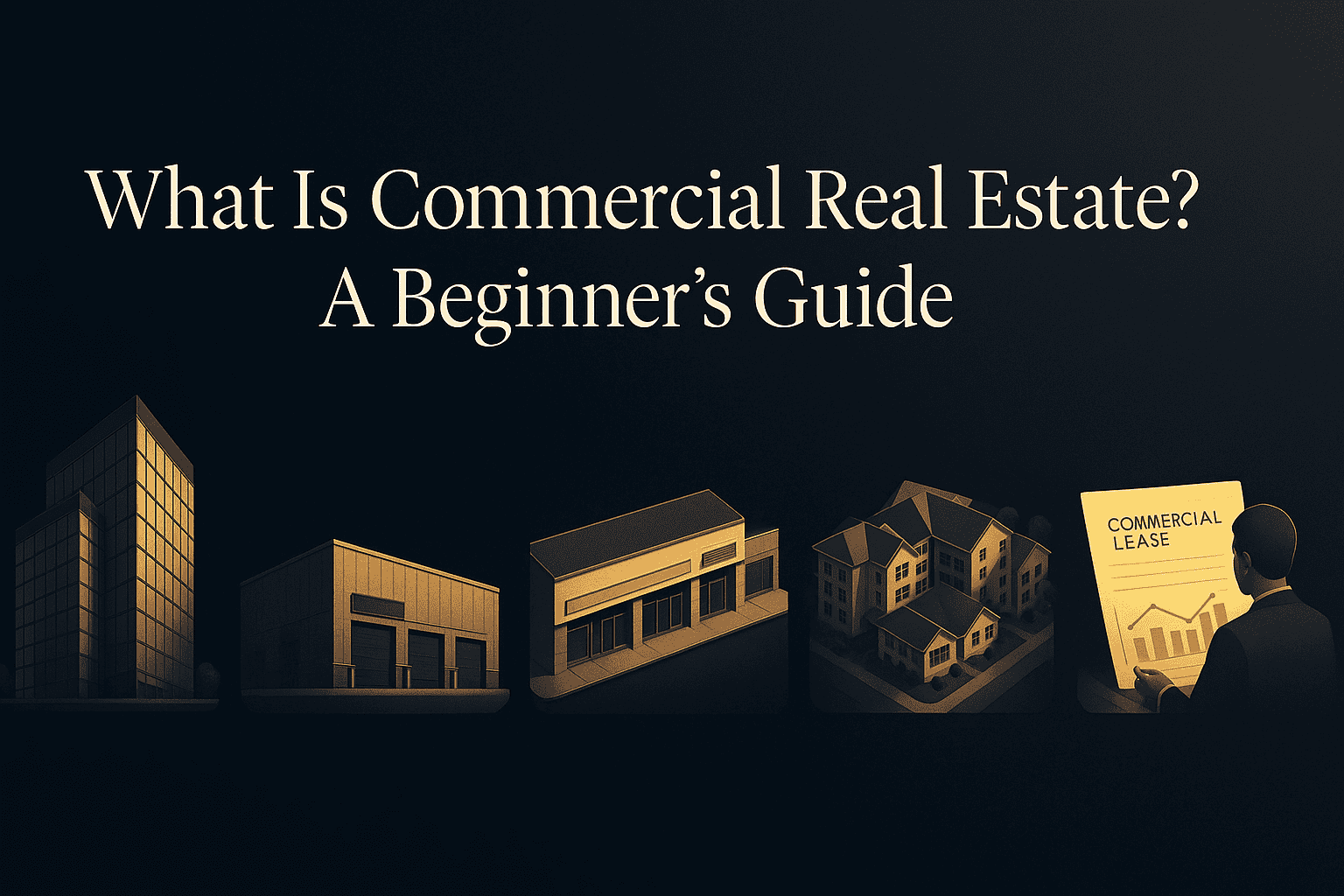
Office properties range from single-tenant suburban buildings to massive downtown skyscrapers. They are typically classified into three tiers: Class A (premium, modern amenities), Class B (functional, slightly dated), and Class C (older buildings in need of renovation). The rise of remote and hybrid work has reshaped demand for office space, creating both challenges and opportunities for investors.
2. Retail Properties
Retail commercial real estate includes shopping centers, strip malls, standalone storefronts, and large-format anchor stores. Location is paramount in retail CRE — foot traffic, visibility, and proximity to complementary businesses all drive value. The growth of e-commerce has disrupted the retail sector, but neighborhood retail and experiential retail concepts continue to perform well.
3. Industrial Real Estate
Industrial properties include warehouses, distribution centers, manufacturing facilities, and flex spaces. This sector has experienced explosive growth driven by e-commerce fulfillment needs and supply chain restructuring. Industrial CRE is considered one of the most resilient and high-performing asset classes in today's market.
4. Multifamily Properties
Multifamily real estate refers to residential buildings with five or more units, such as apartment complexes and mid-rise residential towers. While they house residents, multifamily properties are classified as commercial real estate because of their income-generating nature and the way they are financed and valued. They are a popular starting point for new investors due to their consistent demand. Learn more about multifamily investing strategies to explore this sector further.
5. Hospitality
Hotels, motels, resorts, and short-term rental properties fall under the hospitality category. This is one of the more operationally intensive types of CRE, as revenue is tied directly to occupancy rates and seasonal demand rather than long-term leases.
6. Mixed-Use Developments
Mixed-use properties combine two or more property types within a single development — for example, ground-floor retail with apartments above. These developments are increasingly popular in urban and suburban markets where walkability and live-work-play environments are in high demand.
7. Special Purpose Properties
This category includes properties built for a very specific use, such as car washes, self-storage facilities, medical offices, data centers, and gas stations. Special purpose CRE can offer strong niche returns but may be harder to repurpose if the original business use changes.
How Commercial Real Estate Is Valued
Unlike residential homes, which are often valued by comparing recent sales of similar nearby properties, commercial real estate is primarily valued based on the income it produces. The most common valuation method is the Income Approach, which uses the property's Net Operating Income (NOI) and a capitalization rate (cap rate) to determine value.
- Net Operating Income (NOI): The annual income generated by the property after operating expenses, but before debt service and taxes.
- Capitalization Rate (Cap Rate): A percentage that reflects the expected rate of return on a property. It is calculated by dividing NOI by the property's current market value.
- Cash-on-Cash Return: Measures the annual pre-tax cash flow relative to the total cash invested, giving investors a sense of immediate return on equity.
- Gross Rent Multiplier (GRM): A simpler metric used to quickly compare properties by dividing the purchase price by the gross annual rental income.
Understanding these metrics is critical when evaluating any commercial property. Explore our deep dive on CRE valuation methods to build your analytical foundation before making your first investment decision.
Commercial Leases: What You Need to Know
Commercial leases differ significantly from residential leases. They tend to be longer in duration — often three to ten years or more — and may include complex provisions around rent escalations, tenant improvement allowances, and expense responsibilities. The main lease structures you'll encounter include:
- Gross Lease: The landlord pays most or all property expenses (taxes, insurance, maintenance), and the tenant pays a fixed rent amount.
- Net Lease: The tenant pays base rent plus some or all operating expenses. Subtypes include Single Net (N), Double Net (NN), and Triple Net (NNN) leases.
- Triple Net (NNN) Lease: One of the most investor-friendly structures — the tenant covers rent, property taxes, building insurance, and maintenance costs, creating a highly passive income stream for the owner.
- Percentage Lease: Common in retail, where the tenant pays a base rent plus a percentage of their monthly gross revenue above a specified threshold.
- Modified Gross Lease: A hybrid arrangement where certain expenses are split between the landlord and tenant by negotiation.
Key Players in Commercial Real Estate
Commercial real estate transactions involve a range of professionals, each playing a distinct role in bringing deals to completion:
- Commercial Real Estate Brokers: Licensed professionals who represent buyers, sellers, landlords, or tenants in CRE transactions. Unlike residential agents, commercial brokers specialize in income-producing properties and often have expertise in specific property types or geographic markets.
- Investors and Owners: Individuals, partnerships, real estate investment trusts (REITs), and institutional funds that acquire properties for income and appreciation.
- Lenders: Banks, credit unions, insurance companies, and government agencies (like the SBA or HUD) that provide commercial mortgages and construction loans.
- Appraisers: Certified professionals who provide independent valuations of commercial properties for financing, sale, or tax purposes.
- Property Managers: Firms or individuals responsible for day-to-day operations, tenant relations, and maintenance of commercial properties.
- Title Companies and Attorneys: Handle the legal aspects of commercial transactions, including title searches, escrow, and closing documentation.
How Commercial Real Estate Financing Works
Financing a commercial property is more complex than getting a residential mortgage. Lenders evaluate commercial loans based on the property's income potential as much as — sometimes more than — the borrower's personal creditworthiness. Key financing options include:
- Conventional Commercial Loans: Offered by banks and credit unions with terms typically ranging from 5 to 20 years and loan-to-value (LTV) ratios around 65–80%.
- SBA 7(a) and SBA 504 Loans: Government-backed loan programs designed to help small business owners purchase owner-occupied commercial real estate at favorable terms.
- Commercial Mortgage-Backed Securities (CMBS): Loans that are packaged into securities and sold to investors. They often offer competitive rates but come with stricter terms and limited flexibility.
- Bridge Loans: Short-term financing used to acquire or reposition a property before transitioning to permanent financing.
- Hard Money Loans: Short-term, asset-based loans from private lenders, often used for value-add or distressed properties where traditional financing is not available.
Benefits of Investing in Commercial Real Estate
Commercial real estate offers a distinct set of advantages that have made it a cornerstone of institutional and individual investment portfolios for decades:
- Steady Income: Long-term commercial leases create predictable, consistent cash flow streams.
- Appreciation Potential: Well-located commercial properties tend to increase in value over time, building long-term equity.
- Tax Advantages: Depreciation deductions, 1031 exchanges, and other tax strategies can significantly reduce your taxable income from CRE investments.
- Inflation Hedge: Commercial leases often include rent escalation clauses tied to inflation, helping investors maintain purchasing power over time.
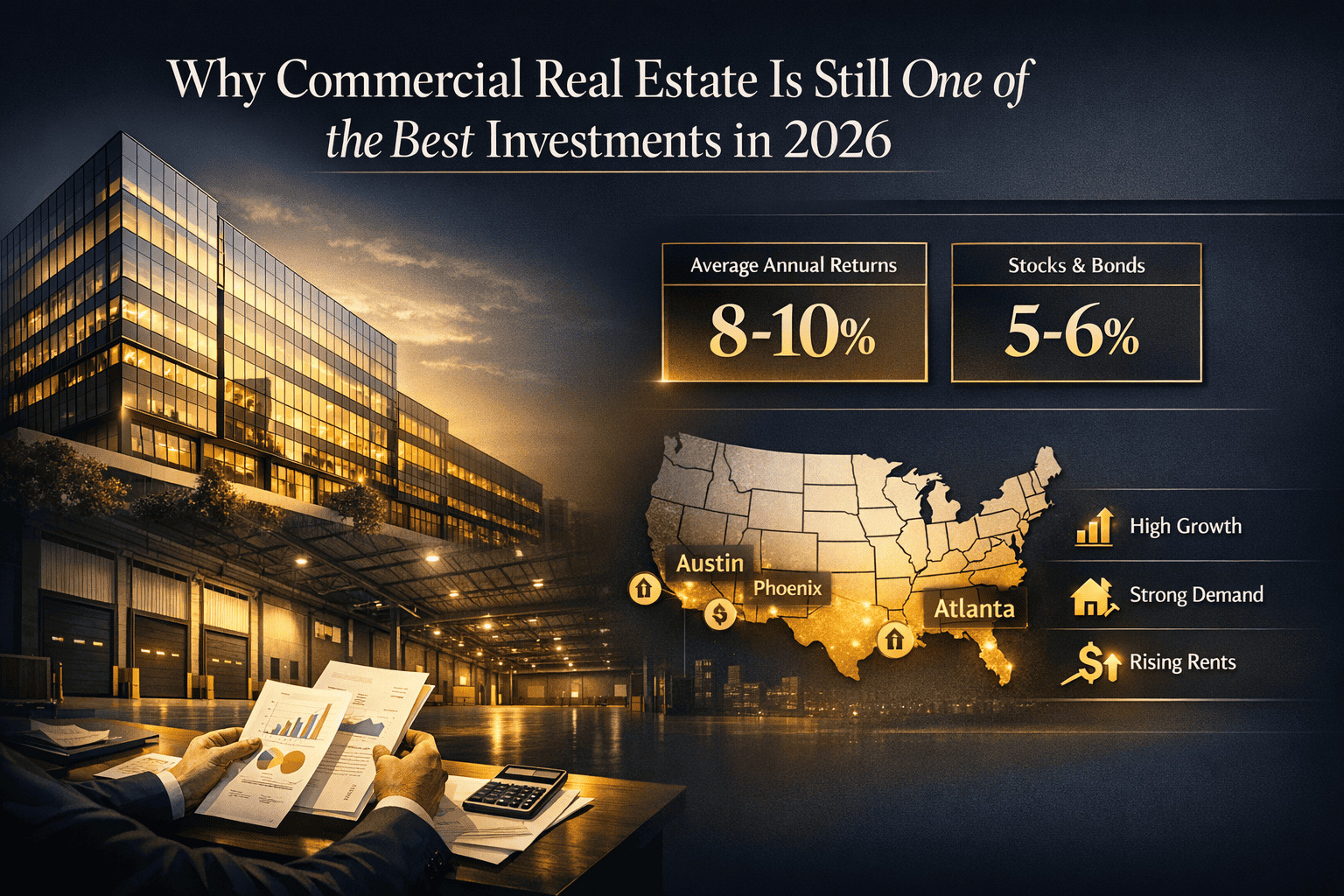
- Portfolio Diversification: CRE has a relatively low correlation with stocks and bonds, making it a valuable diversification tool.
- Leverage: The ability to finance a large portion of a property's purchase price allows investors to amplify returns on their capital.
Risks to Be Aware Of
Like any investment, commercial real estate carries risks that beginners must understand before committing capital:
- Vacancy Risk: Empty units or unleased space directly reduce income and can strain cash flow.
- Market Risk: Economic downturns, rising interest rates, or shifts in supply and demand can negatively impact property values and rental rates.
- Tenant Credit Risk: If a major tenant defaults or goes out of business, income can drop suddenly and significantly.
- Illiquidity: Unlike stocks, commercial properties cannot be sold quickly. Transactions typically take 60–180 days or longer to close.
- Management Complexity: Larger or multi-tenant properties require active management or reliable third-party property managers.
- Capital Expenditures: Roof replacements, HVAC systems, parking lot repairs, and other major expenses can erode returns if not budgeted carefully.
How to Get Started in Commercial Real Estate
Getting started in CRE doesn't have to be overwhelming. Here are actionable steps for beginners:
- Educate Yourself: Read books, take courses, listen to CRE podcasts, and follow industry publications. Knowledge is your most valuable asset.
- Define Your Investment Goals: Are you seeking passive income, long-term appreciation, or a property for your own business? Your goals will determine what type of CRE makes sense for you.
- Build Your Team: Partner with an experienced commercial broker, attorney, lender, and accountant who specialize in CRE.
- Analyze Markets: Focus on markets with strong job growth, population trends, and diverse economies. Understanding local supply and demand dynamics is critical.
- Start with Smaller Properties: Many investors begin with small multifamily buildings, small strip centers, or single-tenant net lease properties before scaling up.
- Run the Numbers: Never rely on gut feeling. Master the financial metrics — cap rate, NOI, cash-on-cash return — and stress test every deal before making an offer.
- Consider Passive Investment: If direct ownership feels too complex, explore REITs or commercial real estate crowdfunding platforms as a lower-barrier entry point.
At Cordura, we're here to guide you through every step of your commercial real estate journey — from identifying the right property to closing your first deal. Browse our current commercial property listings to see what opportunities are available in your target market today.
Commercial Real Estate vs. Residential Real Estate: A Quick Comparison
Understanding the key differences between commercial and residential real estate will help you choose the right path for your goals:
- Purpose: Commercial properties are used for business; residential properties are used for personal living.
- Lease Terms: Commercial leases are longer (3–10+ years); residential leases are typically 12 months.
- Valuation: CRE is valued based on income; residential is valued based on comparable sales.
- Financing: Commercial loans require larger down payments and more complex underwriting.
- Tenant Relationships: Commercial tenants are businesses, which often leads to more professional and stable relationships.
- Management: Commercial properties can be more management-intensive depending on the property type and number of tenants.
Final Thoughts: Is Commercial Real Estate Right for You?
Commercial real estate is not a one-size-fits-all investment. It requires due diligence, market knowledge, and a clear investment strategy. But for those willing to put in the work, it offers some of the most compelling risk-adjusted returns available in today's market — along with the ability to build lasting generational wealth.
Whether you're looking to purchase your first investment property, lease space for your growing business, or diversify a portfolio that has been heavily weighted toward stocks, commercial real estate deserves a serious look. The Cordura team is dedicated to helping investors and property seekers across the United States find the right opportunities and make informed decisions at every stage of the process.
Ready to take the next step? Connect with a Cordura commercial real estate expert today and start your journey with confidence.