
Commercial real estate valuation isn’t one-size-fits-all. Unlike residential properties, commercial assets are valued based on income potential, market conditions, replacement cost, and comparable transactions — often using multiple methods at once. At Cordura Real Estate Network, we apply the most relevant approaches for your specific property type and situation, so you get an estimate grounded in real Kansas City market data — not a generic algorithm.
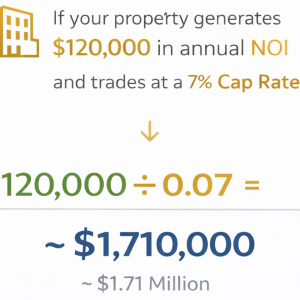
The income approach is the foundation of commercial real estate valuation. We determine how much income your property generates and convert that into value using current market cap rates. Instead of relying on surface-level metrics, we break down your actual operating performance to understand true profitability.
Net Operating Income (NOI)
Rental income by unit or tenant
Operating expenses and efficiency
Lease structure (NNN, gross, modified gross)
Market cap rates based on asset type and location
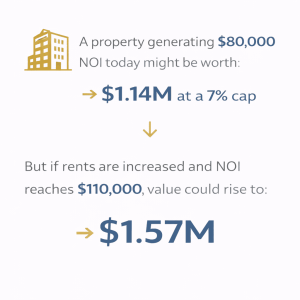
Small changes in income or expenses can significantly impact value — which is why this method drives most investor decisions.
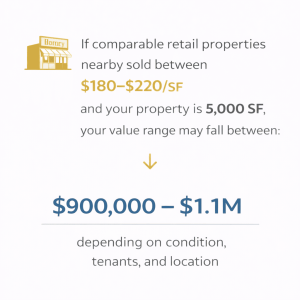
We analyze recent transactions and active listings to understand how similar properties are being priced in the current market.
This ensures your valuation reflects real buyer behavior, not outdated assumptions.
Recent sales of similar properties
Price per square foot benchmarks
Cap rate trends by asset class
Lease rates in your submarket
Time on market and absorption rates
Comps don’t determine value alone — but they define the range buyers are willing to pay
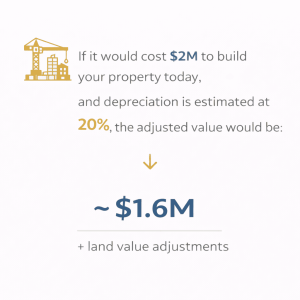
For certain properties — especially newer buildings, unique assets, or vacant properties — we evaluate what it would cost to rebuild the property today.
This creates a baseline value independent of income.
Current construction costs
Land value
Depreciation (physical + functional)
Property condition and improvements
This method is especially useful when income data is limited or inconsistent.
We go beyond current value and analyze where your property sits on the risk-reward spectrum — and what it could become with the right strategy.
This is how investors identify upside.
Lease expiration schedules (rollover risk)
Tenant quality and stability
Vacancy and lease-up potential
Under-market rents
Redevelopment or repositioning opportunities
Value isn’t fixed — it can be created through strategy.
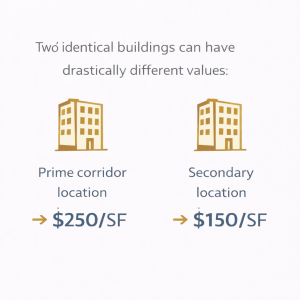
Location plays a major role in how buyers perceive risk, stability, and long-term growth potential. We evaluate your property within its specific submarket, not just the city as a whole.
Submarket performance and demand
Traffic counts and accessibility
Surrounding developments and growth
Demographics and income levels
Competing inventory
Location influences cap rates, tenant demand, and long-term appreciation.
Compare listings
ComparePlease enter your username or email address. You will receive a link to create a new password via email.