
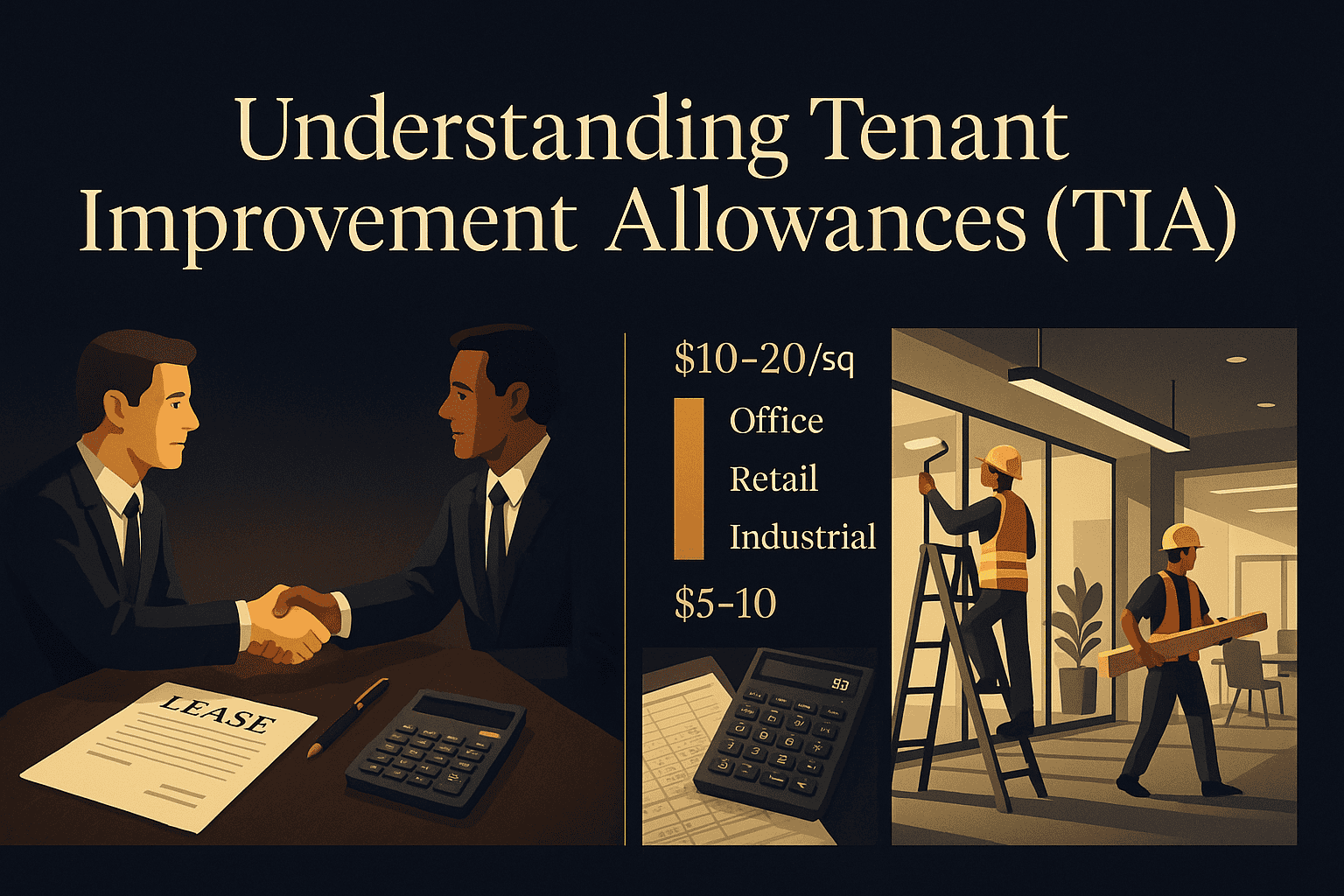
What Is a Tenant Improvement Allowance (TIA)?
A Tenant Improvement Allowance (TIA) is one of the most valuable negotiating tools in commercial real estate leasing. In simple terms, it is a sum of money that a landlord agrees to contribute toward the cost of customizing or renovating a leased space to meet a tenant's specific business needs. Whether you are a startup securing your first office or an established retailer expanding to a new location, understanding TIAs can save you tens of thousands of dollars and significantly shape the terms of your lease.
At Cordura, we work with investors, buyers, and property seekers across the US market every day, and TIA negotiations are consistently among the most impactful — and most misunderstood — aspects of commercial leasing. This guide breaks down everything you need to know.
How Tenant Improvement Allowances Work
When a landlord and tenant enter into a commercial lease, the space is rarely move-in ready for the tenant's intended use. A restaurant needs a commercial kitchen. A law firm needs private offices and a conference room. A medical practice needs exam rooms and specialized plumbing. The TIA is the landlord's financial contribution toward making those changes.
The allowance is typically expressed as a dollar amount per square foot. For example, a landlord might offer $40 per square foot on a 3,000 square foot space, providing a total TIA of $120,000. This money can be used for:
- Demolition and framing
- Electrical, plumbing, and HVAC upgrades
- Flooring, ceilings, and wall finishes
- Lighting and data/telecom infrastructure
- Interior doors and hardware
- Painting and millwork
The tenant typically manages the construction process, hiring contractors and overseeing the build-out. Once work is completed and receipts are submitted, the landlord reimburses the tenant up to the agreed allowance amount. Some landlords prefer to manage the construction directly — this is called a landlord-controlled build-out — which comes with its own set of trade-offs.
TIA vs. Turnkey Build-Out: Key Differences
It is important to distinguish between a TIA and a turnkey build-out. With a TIA, the tenant receives a fixed dollar amount and controls the construction process, bearing any costs above the allowance. With a turnkey arrangement, the landlord agrees to deliver the space in a finished, move-in-ready condition as specified in the lease. Each model has advantages depending on your priorities, timeline, and budget flexibility.
For tenants who want design control and the ability to choose their own contractors, a TIA is often preferred. For tenants who want predictable costs and less project management responsibility, a turnkey arrangement may be more appealing. Learn more about commercial lease negotiation strategies to determine which model fits your situation best.
Factors That Influence TIA Amounts
TIA amounts are not standardized — they vary widely based on market conditions, property class, lease term, and the negotiating leverage of both parties. Here are the key factors that influence how much allowance a landlord will offer:
1. Market Conditions
In a tenant's market where vacancies are high, landlords are more motivated to offer generous TIAs to attract and retain quality tenants. In a landlord's market with low vacancy rates, allowances tend to be lower because demand is strong and landlords have more options.
2. Lease Term Length
Landlords are more willing to invest in a space when they know they will recoup their contribution over a longer lease. A 10-year lease will typically command a significantly higher TIA than a 3-year lease. Most landlords amortize the TIA into the overall economics of the deal.
3. Property Class and Location
Class A office buildings in major metropolitan areas often offer higher per-square-foot allowances compared to Class B or Class C properties. Premium locations attract premium tenants, and landlords in competitive corridors use TIAs as a differentiator.
4. Creditworthiness of the Tenant
A well-established business with strong financials is a lower risk to a landlord. Consequently, creditworthy tenants can negotiate more favorable TIAs because the landlord has confidence the lease will be fulfilled and the investment protected.
5. Condition of the Existing Space
If a space is already partially built out from a previous tenant, the landlord may offer a lower TIA since less work is required. Conversely, raw or shell spaces typically carry higher allowances to account for the extensive work needed to make them functional.
Typical TIA Ranges by Property Type
While every deal is different, here are general benchmarks for TIAs across common commercial property types in the US market:
- Office Space: $40 – $80+ per square foot in major markets
- Retail Space: $20 – $60 per square foot depending on location and build-out complexity
- Industrial/Warehouse: $5 – $25 per square foot for basic improvements
- Medical/Healthcare: $60 – $150+ per square foot due to specialized infrastructure requirements
- Restaurant: $50 – $100+ per square foot given extensive kitchen and utility demands
These figures can fluctuate significantly based on geography, current construction costs, and the specific lease terms being negotiated. Working with an experienced commercial real estate advisor is the best way to benchmark what is reasonable in your target market.
How to Negotiate a Better TIA
Negotiating a tenant improvement allowance is both an art and a science. Here are proven strategies to help you maximize your allowance:
Get Competitive Bids on Construction
Before entering lease negotiations, obtain preliminary construction estimates from at least two or three qualified contractors. This gives you a credible, data-backed figure to present to the landlord and strengthens your negotiating position.
Understand the Full Economics of the Deal
Landlords evaluate TIAs in the context of the entire lease transaction. If you are willing to extend your lease term, increase your space commitment, or agree to favorable rent escalation clauses, you may be able to unlock a higher allowance. Think of the deal holistically rather than focusing solely on the TIA figure.
Request an Above-Standard TIA
Start by asking for more than you expect to receive. Landlords often have budgeted a range for TIAs, and many tenants leave money on the table by failing to ask. Anchor high and negotiate toward a mutually acceptable number.
Consider TIA Buydowns in Exchange for Lower Rent
In some cases, you can negotiate a higher TIA in exchange for slightly higher base rent. This can be advantageous if your immediate capital needs are significant and your cash flow improves over time. Run the numbers carefully to ensure the trade-off makes financial sense. Explore our commercial real estate investment guide for deeper financial modeling frameworks.
Clarify Eligible Expenditures
Not all costs may qualify for reimbursement under a TIA. Furniture, fixtures, and equipment (FF&E) are often excluded. Make sure the lease clearly defines what improvements are covered, the timeline for reimbursement, and the documentation required to receive payment.
TIA Tax Implications for Tenants and Landlords
Both tenants and landlords need to understand the tax treatment of tenant improvement allowances, as the rules can significantly affect the net value of the arrangement.
For Tenants
Under IRS rules, a TIA received by a tenant is generally not considered taxable income as long as the improvements become the property of the landlord at the end of the lease and the allowance is used exclusively for qualifying construction costs. If the tenant retains ownership of the improvements or uses funds for non-qualifying expenses, tax obligations may arise. Always consult a qualified tax advisor before finalizing your lease.
For Landlords
Landlords who fund tenant improvements can typically depreciate those costs over the useful life of the improvements, which is often 15 years for qualified improvement property (QIP) under current US tax law. The Tax Cuts and Jobs Act of 2017 made QIP eligible for 100% bonus depreciation, providing significant near-term tax benefits for landlords. Again, professional tax guidance is strongly recommended given the complexity of these rules.
Common TIA Pitfalls to Avoid
Even experienced tenants and landlords can stumble when dealing with tenant improvement allowances. Watch out for these common mistakes:
- Vague lease language: If the TIA terms are not clearly defined in the lease, disputes over eligible costs, timelines, and reimbursement procedures are almost inevitable. Specificity is your friend.
- Underestimating construction costs: Build-out costs have risen sharply in recent years due to supply chain disruptions and labor shortages. A TIA that seemed generous two years ago may fall short today. Get updated contractor estimates before signing.
- Missing reimbursement deadlines: Many TIA provisions include a deadline by which the tenant must complete improvements and submit for reimbursement. Missing this window can mean forfeiting allowance funds entirely.
- Ignoring landlord approval requirements: Most leases require landlord approval of plans, contractors, and materials before construction begins. Starting work without proper approvals can void the TIA and create legal liability.
- Failing to negotiate TIA recapture provisions: If you vacate the space early, some leases require you to repay a prorated portion of the TIA. Understand these recapture clauses before you sign.
TIA Considerations for Commercial Real Estate Investors
If you are a commercial real estate investor rather than a tenant, TIAs represent a different kind of consideration. Offering competitive improvement allowances can be a powerful leasing strategy to attract creditworthy tenants, reduce vacancy periods, and increase the long-term value of your asset.
When underwriting a new acquisition, it is essential to account for potential TIA obligations on vacant spaces. A building with significant vacancy may require substantial upfront capital investment in tenant improvements before it generates stabilized cash flow. Factor these costs into your pro forma carefully to avoid yield compression surprises. Browse available commercial properties on Cordura to find opportunities that align with your investment thesis.
Investors should also consider how TIA commitments affect their balance sheet and financing. Some lenders will adjust loan-to-value calculations based on near-term TIA obligations, particularly in value-add deals where multiple tenant spaces need to be leased up simultaneously.
Working with a Commercial Real Estate Advisor on TIA Negotiations
The complexity of tenant improvement allowances — from lease language to tax treatment to construction management — underscores the value of working with an experienced commercial real estate advisor. A knowledgeable broker or tenant rep can help you benchmark market-appropriate TIA levels, identify negotiating leverage, structure deal terms that protect your interests, and avoid the costly mistakes that inexperienced parties often make.
At Cordura, our team has deep expertise in the US commercial real estate market and a proven track record of helping clients negotiate favorable lease terms, including maximizing tenant improvement allowances. Whether you are a business owner seeking your first commercial space or a seasoned investor managing a complex portfolio, we are here to help you make informed decisions and achieve the best possible outcomes.
Final Thoughts
Tenant improvement allowances are a critical component of commercial leasing that can dramatically affect the financial success of a deal for both tenants and landlords. By understanding how TIAs work, what factors influence their size, how to negotiate effectively, and what pitfalls to avoid, you position yourself to capture significant value in any commercial lease transaction.
As construction costs continue to evolve and market conditions shift across US commercial real estate markets, staying informed about TIA benchmarks and best practices is more important than ever. Whether you are stepping into lease negotiations for the first time or are a seasoned commercial real estate professional, the knowledge you bring to the table directly impacts the outcome you achieve.
Ready to explore commercial real estate opportunities or get expert guidance on your next lease negotiation? Contact the Cordura team today and let us help you navigate the process with confidence.