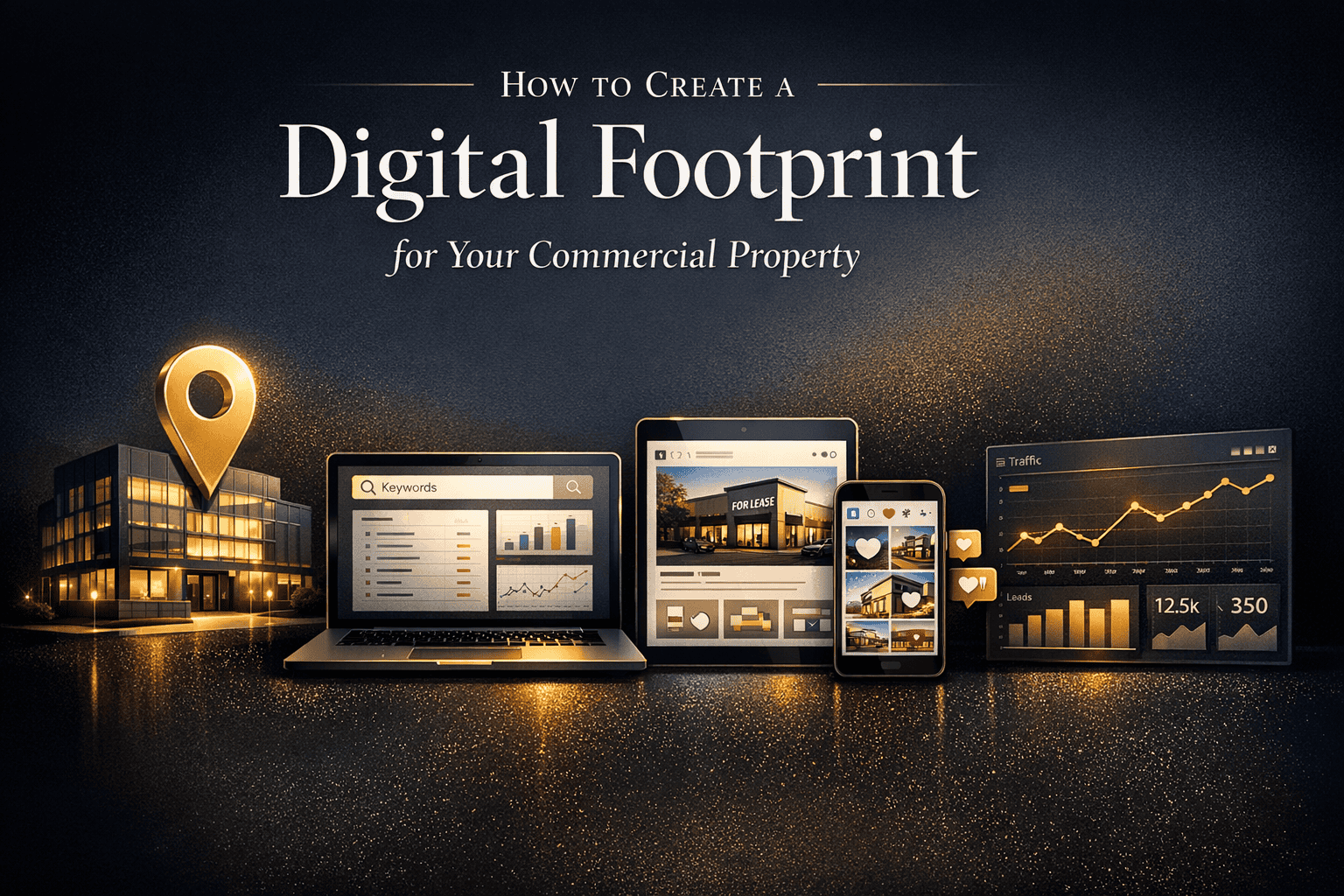
How to Create a Digital Footprint for Your Commercial Property
In today's hyper-connected real estate market, having a strong digital presence isn't optional — it's essential. Whether you own a retail strip center, an office building, or a mixed-use development, your commercial property needs to be discoverable online. A well-crafted digital footprint helps attract qualified tenants, serious investors, and motivated buyers before they ever pick up the phone.
At Cordura, we work with commercial property owners and investors across the US market, and one of the most common challenges we see is underexposure online. In this guide, we'll walk you through exactly how to build a powerful digital presence for your commercial property — step by step.
Why a Digital Footprint Matters for Commercial Real Estate
The commercial real estate market has undergone a massive digital transformation. According to industry research, over 80% of commercial real estate searches now begin online. If your property isn't showing up in those searches, you're leaving significant value on the table.
A strong digital footprint accomplishes several key goals:
- Increases property visibility to investors, tenants, and buyers
- Builds credibility and trust before a prospect ever contacts you
- Generates inbound leads without relying solely on brokers
- Positions your asset competitively in a crowded market
- Supports faster lease-up or sale timelines
Whether you're a first-time commercial property owner or a seasoned investor, understanding how to leverage digital channels is a game-changer. Learn more about navigating commercial property investment to understand how digital presence impacts your overall asset strategy.
Step 1: Claim and Optimize Your Google Business Profile
The first and most impactful step is claiming your Google Business Profile (formerly Google My Business). This free tool ensures your property appears in local Google searches and on Google Maps — two of the most visited platforms by commercial real estate prospects.
How to Optimize Your Google Business Profile
- Use your exact property name and address — consistency is critical for local SEO rankings.
- Select the correct business category — options like "Commercial Real Estate Agency" or "Office Space Rental Agency" help Google match your listing to relevant queries.
- Upload high-quality photos — exterior shots, interior spaces, parking areas, and amenities all increase engagement.
- Write a keyword-rich description — include your property type, location, square footage, and unique selling points.
- Collect and respond to reviews — social proof significantly boosts both credibility and local search rankings.
- Keep hours and contact information updated — outdated information erodes trust instantly.
A fully optimized Google Business Profile alone can dramatically increase inbound inquiries from local investors and tenants searching for available commercial space in your area.
Step 2: Build a Dedicated Property Website or Landing Page
Every commercial property deserves its own dedicated web presence. This could be a standalone website for a large asset or a detailed landing page within your portfolio site. Either way, this becomes the hub of your digital footprint.
Essential Elements of a Commercial Property Website
- Property address and interactive map — location is everything in commercial real estate.
- High-resolution photo gallery and virtual tour — visual content drives 94% more engagement than text alone.
- Detailed specifications — square footage, zoning, CAM fees, lease terms, utilities, and ceiling heights.
- Demographics and trade area data — investors and retailers want to know the surrounding market.
- Downloadable brochure or offering memorandum — gate this content to capture lead information.
- Clear call-to-action (CTA) — make it effortless to schedule a tour or request more information.
- SEO-optimized meta titles and descriptions — target keywords like "[city] commercial space for lease" or "[neighborhood] retail property for sale."
Your property website is the centerpiece of your digital strategy. All other digital channels should funnel traffic back to this page to convert visitors into qualified leads.
Step 3: List Your Property on Commercial Real Estate Platforms
Getting your property listed on major commercial real estate listing platforms exponentially increases your reach. These platforms already have massive organic search traffic and active databases of buyers, tenants, and brokers.
Top Platforms to List Your Commercial Property
- CoStar — the industry's largest commercial real estate database, used heavily by brokers and institutional investors.
- LoopNet — highly trafficked consumer-facing platform with strong SEO authority.
- Crexi — a growing marketplace popular with buyers, sellers, and tenants nationwide.
- Brevitas — ideal for off-market and private commercial listings.
- CityFeet and PropertyShark — strong regional platforms that supplement national exposure.
- Cordura's property marketplace — connect directly with qualified commercial real estate seekers in the US market.
When creating listings, use consistent property details, professional photography, and keyword-rich descriptions across every platform. Inconsistent information can confuse search engines and undermine your credibility with prospects.
Step 4: Leverage SEO to Drive Organic Traffic
Search Engine Optimization (SEO) is the long-term engine of your digital footprint. When done correctly, SEO ensures your property appears at the top of Google results when prospects search for commercial space in your market.
Key SEO Tactics for Commercial Properties
- Target local keywords — phrases like "warehouse space for lease in Dallas" or "retail storefront for sale in Miami" capture high-intent searches.
- Create location-specific content — blog posts and landing pages about your submarket, nearby businesses, and development activity build topical authority.
- Build backlinks — get mentioned in local business directories, chamber of commerce websites, and commercial real estate news outlets.
- Optimize for mobile — more than 60% of property searches happen on mobile devices. A slow or non-responsive site will hurt your rankings and user experience.
- Use schema markup — structured data helps Google understand your property details and display rich results in search.
- Publish regular content — market updates, tenant spotlights, and investment analyses signal authority to both search engines and prospects.
SEO takes time, but the compounding returns are unmatched. Properties with strong organic search visibility consistently attract higher-quality leads at a lower cost per acquisition than paid advertising alone. Explore our latest commercial real estate market trends to understand how market conditions are shaping digital search behavior.
Step 5: Develop a Social Media Presence
Social media platforms are powerful tools for building awareness, showcasing your property, and engaging with potential tenants and investors. The key is choosing the right platforms and creating content that resonates with a commercial real estate audience.
Best Social Media Platforms for Commercial Real Estate
- LinkedIn — the top platform for reaching commercial real estate professionals, investors, and corporate tenants. Share market insights, property highlights, and company news.
- Instagram — ideal for visually striking properties. Use high-quality photos, drone footage, and Stories to showcase your asset.
- Facebook — effective for community engagement and targeted paid advertising to reach local business owners and investors.
- YouTube — property walkthrough videos and market analysis content perform exceptionally well and support SEO through video search rankings.
- X (formerly Twitter) — useful for sharing market news, industry commentary, and building thought leadership.
Content Ideas for Commercial Property Social Media
- Virtual property tours and drone footage
- Before-and-after renovation content
- Local market statistics and investment highlights
- Tenant spotlights and success stories
- Behind-the-scenes construction or improvement updates
- Industry news commentary and market analysis
Consistency is key. Posting regularly — even two to three times per week — builds brand recognition and keeps your property top of mind with your target audience.
Step 6: Launch Targeted Digital Advertising Campaigns
While organic strategies build long-term visibility, targeted paid advertising delivers immediate exposure to highly specific audiences. Commercial real estate advertising has become increasingly sophisticated, allowing you to reach decision-makers at the exact moment they're searching.
Most Effective Paid Channels for Commercial Properties
- Google Ads (Search Campaigns) — bid on high-intent keywords to appear at the top of search results for prospects actively looking for commercial space.
- Google Display Network — serve visual banner ads to users who have previously visited commercial real estate websites or match investor/tenant demographic profiles.
- LinkedIn Ads — target by job title, industry, company size, and geography to reach CFOs, real estate directors, and franchise operators.
- Facebook and Instagram Ads — use detailed demographic targeting to reach local business owners and accredited investors in your market.
- Retargeting Campaigns — re-engage users who visited your property website or listing but didn't convert. These campaigns typically deliver 3-5x higher conversion rates.
Start with a modest budget, test multiple creative formats, and optimize toward your key conversion metrics — whether that's tour requests, brochure downloads, or direct inquiries.
Step 7: Build an Email Marketing Strategy
Email remains one of the highest-ROI digital marketing channels in commercial real estate. Building and nurturing a targeted email list keeps your property in front of qualified prospects over time.
Email Marketing Best Practices for Commercial Properties
- Segment your list — separate investors, potential tenants, brokers, and past inquiries for tailored messaging.
- Create a regular newsletter — share market updates, property highlights, and investment opportunities to stay relevant.
- Automate lead nurture sequences — when someone downloads your brochure or requests information, trigger a series of follow-up emails that guide them toward a tour or offer.
- Track open rates and click-throughs — use these metrics to refine your messaging and identify your most engaged prospects.
- Include strong CTAs — every email should have a clear next step, whether it's scheduling a call, downloading a document, or visiting your listing.
Step 8: Create and Distribute High-Value Content
Content marketing is one of the most powerful yet underutilized strategies in commercial real estate. By creating informative, relevant content, you attract organic search traffic, build authority, and generate leads passively over time.
Content Types That Work for Commercial Real Estate
- Market reports and submarket analyses — position yourself as a local market expert.
- Investment case studies — showcase the performance and potential of your property or portfolio.
- Tenant guides — help business owners understand the leasing process, what to look for in a space, and local market dynamics.
- Video walkthroughs and drone tours — visual content converts at significantly higher rates for commercial listings.
- Infographics — distill complex market data or property specs into shareable visual formats.
- Webinars and virtual events — engage investor and tenant audiences with live market discussions and Q&A sessions.
Distribute this content through your website, social channels, email list, and third-party publications to maximize reach and build inbound links that strengthen your SEO authority.
Step 9: Monitor, Measure, and Optimize Your Digital Presence
Building a digital footprint is not a set-it-and-forget-it exercise. Ongoing monitoring and optimization are essential to ensure your investment is generating results.
Key Metrics to Track
- Organic website traffic — are more qualified visitors finding your property online over time?
- Search rankings — are your target keywords moving up in Google results?
- Lead volume and quality — how many inquiries are you receiving, and are they from serious prospects?
- Listing views and engagement — on CoStar, LoopNet, and other platforms, track impressions and click-through rates.
- Social media reach and engagement — are your posts generating meaningful interaction with your target audience?
- Email performance — open rates, click-through rates, and conversion rates for your campaigns.
- Cost per lead — evaluate which channels deliver the highest-quality leads at the lowest cost.
Use tools like Google Analytics 4, Google Search Console, and your CRM platform to track these metrics consistently. Review performance monthly, identify what's working, and reallocate resources to your highest-performing channels.
Step 10: Partner with a Commercial Real Estate Digital Expert
Executing a comprehensive digital marketing strategy for a commercial property requires time, expertise, and resources. Many property owners find that partnering with a specialized commercial real estate platform accelerates results significantly.
At Cordura, we provide commercial property owners and investors with the tools, marketplace exposure, and strategic guidance needed to maximize digital visibility and attract qualified buyers, tenants, and investors across the US market. From professional listing optimization to targeted digital campaigns, we help your asset stand out in an increasingly competitive landscape.
Discover how our platform connects commercial property owners with serious prospects by visiting our commercial property listing services page.
Final Thoughts: Your Digital Footprint Is a Long-Term Asset
Creating a powerful digital footprint for your commercial property is one of the highest-leverage investments you can make as a property owner or investor. From Google Business Profiles and SEO-optimized listing platforms to targeted advertising and content marketing, each element compounds over time to build sustainable visibility and inbound lead flow.
The commercial real estate market rewards those who show up consistently online. Start with the foundational steps — claim your Google listing, build a professional property page, and get listed on major platforms — then layer in advanced strategies as your digital presence grows.
With the right approach and the right partners, your commercial property won't just exist in the market — it will dominate its digital landscape.