Retail Real Estate in 2026: Dead or Evolving?
For the better part of a decade, headlines have declared the death of retail real estate. Empty storefronts, shuttered department stores, and the relentless rise of e-commerce painted a bleak picture. But as 2026 unfolds, a more nuanced story is emerging — one not of collapse, but of transformation. Retail real estate isn't dead. It's evolving faster than ever, and savvy investors are paying close attention.
At Cordura, we work with investors, buyers, and property seekers across the US market who are asking the same critical question: Is retail commercial real estate still a viable asset class in 2026? The answer, supported by market data and emerging trends, is a resounding yes — provided you understand where the opportunities lie.
The State of Retail Real Estate in 2026
The retail sector has undergone a dramatic restructuring since 2020. While big-box retailers and traditional malls continue to consolidate, a new generation of retail formats is thriving. Neighborhood strip centers, experiential retail hubs, and mixed-use developments are posting strong occupancy rates and rental income figures that rival pre-pandemic highs.
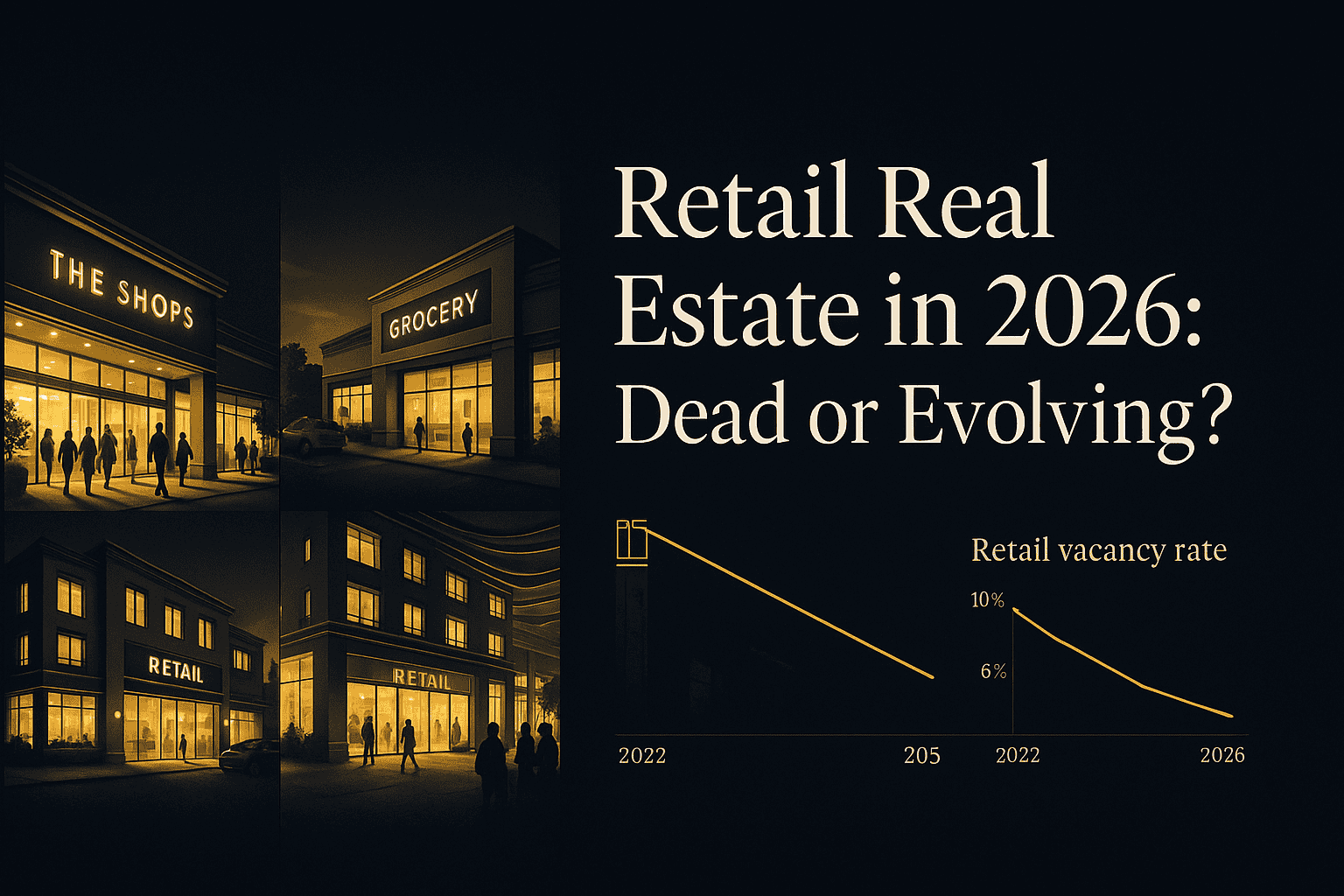
According to industry data, retail vacancy rates in top US metros dropped to approximately 4.8% in early 2026 — one of the lowest levels recorded in over a decade. Asking rents for well-positioned retail spaces have climbed steadily, particularly in suburban markets where population migration has fueled local consumer demand.
The key distinction investors must understand: not all retail is created equal. The winners in 2026 are properties that serve daily needs, offer immersive experiences, or anchor thriving mixed-use communities. The losers remain legacy formats that failed to adapt.
Why Traditional Retail Struggled — And What Changed
The narrative of retail's demise was largely tied to the acceleration of e-commerce, particularly during the pandemic years. As consumers shifted spending online, anchor tenants like department stores and specialty apparel chains closed locations en masse. This left shopping malls — especially Class B and Class C properties — with significant vacancy challenges.
However, the story didn't end there. Several critical shifts reshaped the retail landscape:
- The Experience Economy: Consumers increasingly seek experiences that cannot be replicated online — fitness studios, entertainment venues, dining concepts, and wellness-focused retailers have become anchor tenants in their own right.
- Last-Mile Retail: Brands discovered that physical storefronts serve as crucial distribution and fulfillment points, blending e-commerce logistics with in-person engagement.
- Suburban Migration: Remote work permanently shifted population density toward suburban and secondary markets, creating fresh demand for neighborhood retail.
- Supply Discipline: Very little new retail square footage was delivered between 2020 and 2025, tightening supply and supporting rents in well-located properties.
These dynamics have created a bifurcated market — and understanding which side of that divide a property sits on is essential for any investor evaluating retail assets today. If you're exploring commercial real estate investment strategies, understanding this bifurcation is your first step toward profitable decision-making.
The Formats Winning in 2026
1. Neighborhood and Convenience Strip Centers
Grocery-anchored neighborhood centers and convenience-oriented strip malls have emerged as the most resilient retail format in 2026. Anchored by essential services — supermarkets, pharmacies, urgent care clinics, and quick-service restaurants — these properties offer stable, necessity-driven foot traffic that is largely insulated from e-commerce pressure. Cap rates for grocery-anchored retail in prime suburban corridors have compressed significantly as institutional investors compete for limited inventory.
2. Experiential and Entertainment-Anchored Retail
Entertainment-driven retail is redefining what a shopping center can be. Pickleball clubs, immersive art installations, axe throwing venues, food halls, and boutique fitness concepts are signing leases in spaces once occupied by traditional retailers. These tenants generate foot traffic, extend dwell time, and create the social experiences that keep customers coming back — something an algorithm cannot replicate.
3. Mixed-Use Developments
Perhaps the most transformative trend in retail real estate is the rise of mixed-use projects that integrate retail with residential, office, and hospitality components. These developments create built-in customer bases, reduce reliance on drive-by traffic, and position retail tenants within vibrant, walkable communities. For investors, mixed-use projects offer diversified income streams and a hedge against sector-specific downturns.
4. Power Centers and Open-Air Formats
Open-air retail formats — lifestyle centers and power centers anchored by value-oriented or off-price retailers — have outperformed enclosed malls throughout the post-pandemic era. Tenants like TJX Companies, Ross Stores, and Burlington have expanded aggressively, filling spaces left by departing legacy retailers. These formats benefit from lower operating costs, natural ventilation consumer preference, and flexible lease structures.
Challenges Still Facing Retail Real Estate
Despite the positive momentum, retail real estate investors in 2026 must navigate several persistent headwinds:
- Interest Rate Environment: Although rates have moderated from their 2023 peaks, financing costs remain elevated compared to the ultra-low rate era, compressing returns for leveraged buyers and dampening transaction volume in some segments.
- Lease Structures Under Pressure: Tenants are increasingly negotiating shorter initial lease terms, co-tenancy clauses, and kick-out provisions — terms that add complexity to underwriting and reduce long-term income visibility.
- Distressed Mall Legacy: A significant portion of Class B and Class C enclosed mall inventory remains challenged, and repositioning these properties requires substantial capital and creative vision.
- Consumer Spending Uncertainty: Inflationary pressures on household budgets continue to affect discretionary retail spending, putting some specialty tenants at risk of contraction.
- Technological Disruption: AI-driven shopping personalization and rapid growth in social commerce continue to shift purchase behavior in ways that challenge brick-and-mortar retailers to justify their physical footprints.
Opportunities for Investors in 2026
So where exactly should investors be looking within retail real estate in 2026? Cordura's market perspective points to several high-conviction opportunity areas:
- Suburban Grocery-Anchored Centers in Sun Belt Markets: Population growth in markets like Texas, Florida, Arizona, and the Carolinas continues to support retail demand. Grocery-anchored centers in these regions offer durable income and strong re-leasing prospects.
- Value-Add Strip Center Repositioning: Acquiring under-managed or partially vacant neighborhood strip centers and repositioning them with experiential or service-oriented tenants offers compelling risk-adjusted returns for operators with strong leasing capabilities.
- Adaptive Reuse of Distressed Mall Anchors: Forward-thinking developers are converting former department store boxes into multifamily housing, medical facilities, entertainment venues, and fulfillment centers — unlocking value from what traditional metrics dismissed as stranded assets.
- Medical and Healthcare Retail: The integration of healthcare services into retail environments — urgent care, dental, optometry, behavioral health — represents one of the most durable demand drivers in the sector. Health-focused retail tenants typically sign longer leases and generate recession-resistant traffic.
For those evaluating specific markets, our team at Cordura can help you identify retail properties that align with your investment thesis and risk profile. Explore our retail commercial properties for sale across key US markets to find opportunities that match your criteria.
Technology's Role in the Future of Retail Real Estate
One of the most compelling narratives shaping retail real estate in 2026 is the integration of technology — not as a threat to physical retail, but as an enhancer of the in-store experience. Smart stores leveraging AI, RFID inventory management, and frictionless checkout are reducing operating costs while improving the consumer experience. Retailers that master the omnichannel model — seamlessly blending digital and physical touchpoints — are signing leases and expanding their footprints.
For landlords and investors, this means properties with strong digital infrastructure — high-speed connectivity, smart building systems, and data-capable environments — command premium rents and attract higher-quality tenants. Upgrading retail assets to meet these technology demands is increasingly a prerequisite for competitive positioning, not a luxury.
What Lenders and Capital Markets Think About Retail
Lender sentiment toward retail real estate has shifted meaningfully over the past 24 months. While lenders remain cautious about enclosed mall financing, grocery-anchored neighborhood centers, power centers with strong sales performance, and well-leased mixed-use retail are attracting competitive debt terms from banks, CMBS platforms, and life insurance companies.
Private equity and institutional capital have also returned to retail, with several major funds raising targeted retail-focused vehicles in 2025 and deploying capital aggressively in 2026. This institutional re-engagement is a strong signal that the smart money views retail real estate as a recovery and value-creation play — not a sector in terminal decline.
How to Evaluate a Retail Property in 2026
If you're considering adding retail real estate to your portfolio, here are the critical underwriting factors that matter most in the current environment:
- Tenant Credit Quality: Prioritize properties leased to credit-rated or nationally recognized tenants with proven omnichannel capabilities and strong sales-per-square-foot metrics.
- Trade Area Demographics: Analyze population density, household income growth, and daytime employment within the trade area. Sun Belt suburban corridors with favorable demographic trajectories offer the strongest fundamentals.
- Lease Expiration Schedule: Stagger lease expirations to minimize rollover risk and ensure you have time to replace tenants if needed without creating cliff-edge vacancy events.
- Physical Condition and Flexibility: Prioritize properties with flexible floor plates, modern infrastructure, and manageable deferred maintenance. Adaptability is the defining asset quality in 2026.
- Competitive Supply Environment: Assess the pipeline of new retail development in your target trade area. Markets with constrained supply pipelines provide stronger rent growth prospects and higher barriers to entry.
Working with an experienced commercial real estate advisor is critical when navigating the complexity of today's retail market. At Cordura, our team specializes in helping investors identify, underwrite, and acquire retail properties that are positioned to thrive — not just survive. Learn more about how we approach commercial real estate advisory services for retail investors across the US.
The Verdict: Retail Real Estate Is Very Much Alive
The question posed at the beginning of this post has a clear answer: retail real estate in 2026 is not dead — it is evolving, and the evolution is creating genuine opportunity for informed investors. The sector has shed its weakest formats, absorbed a historic shock, and emerged with stronger supply discipline, more dynamic tenant mixes, and a clearer value proposition than it has had in years.
The investors who will succeed in retail real estate over the next five years are those who can distinguish between legacy formats and forward-looking assets, who understand the demographics driving demand in suburban and Sun Belt markets, and who have the operational expertise to unlock value through repositioning and tenant curation.
At Cordura, we're committed to helping you navigate this evolving landscape with clarity and confidence. Whether you're a first-time retail investor or an experienced operator looking to expand your portfolio, our team has the market intelligence and transaction expertise to help you find and close the right deals in 2026 and beyond.