
Commercial vs Residential Real Estate: Which Is Right for You?
Whether you're a first-time investor or a seasoned property buyer, one of the most pivotal decisions you'll face is choosing between commercial and residential real estate. Both offer compelling opportunities, but they differ dramatically in risk profile, returns, management demands, and entry requirements. Understanding these differences is essential before you commit your capital.
At Cordura, we help investors and property seekers across the US navigate both markets with confidence. In this guide, we break down the key distinctions so you can make the smartest choice for your financial goals.
What Is Commercial Real Estate?
Commercial real estate (CRE) refers to properties used primarily for business purposes. This broad category includes:
- Office buildings — from single-tenant suites to multi-floor corporate towers
- Retail spaces — strip malls, shopping centers, and standalone storefronts
- Industrial properties — warehouses, distribution centers, and manufacturing facilities
- Multifamily complexes — apartment buildings with five or more units
- Mixed-use developments — properties combining residential, retail, and office space
- Hotels and hospitality — short-term lodging and event venues
Commercial leases tend to run longer — typically three to ten years — providing investors with stable, predictable income streams. If you're exploring your options, our commercial real estate investment guide offers a deep dive into property types and strategies.
What Is Residential Real Estate?
Residential real estate encompasses properties designed for people to live in. Common asset types include:
- Single-family homes
- Condominiums and townhouses
- Duplexes and small multifamily properties (2–4 units)
- Vacation rentals and short-term rental properties
Residential leases are typically month-to-month or annual, making them more flexible but also more susceptible to tenant turnover and vacancy risk. This market is generally more accessible to individual buyers due to lower price points and widely available financing options like FHA and conventional loans.
Key Differences Between Commercial and Residential Real Estate
1. Income Potential and Returns
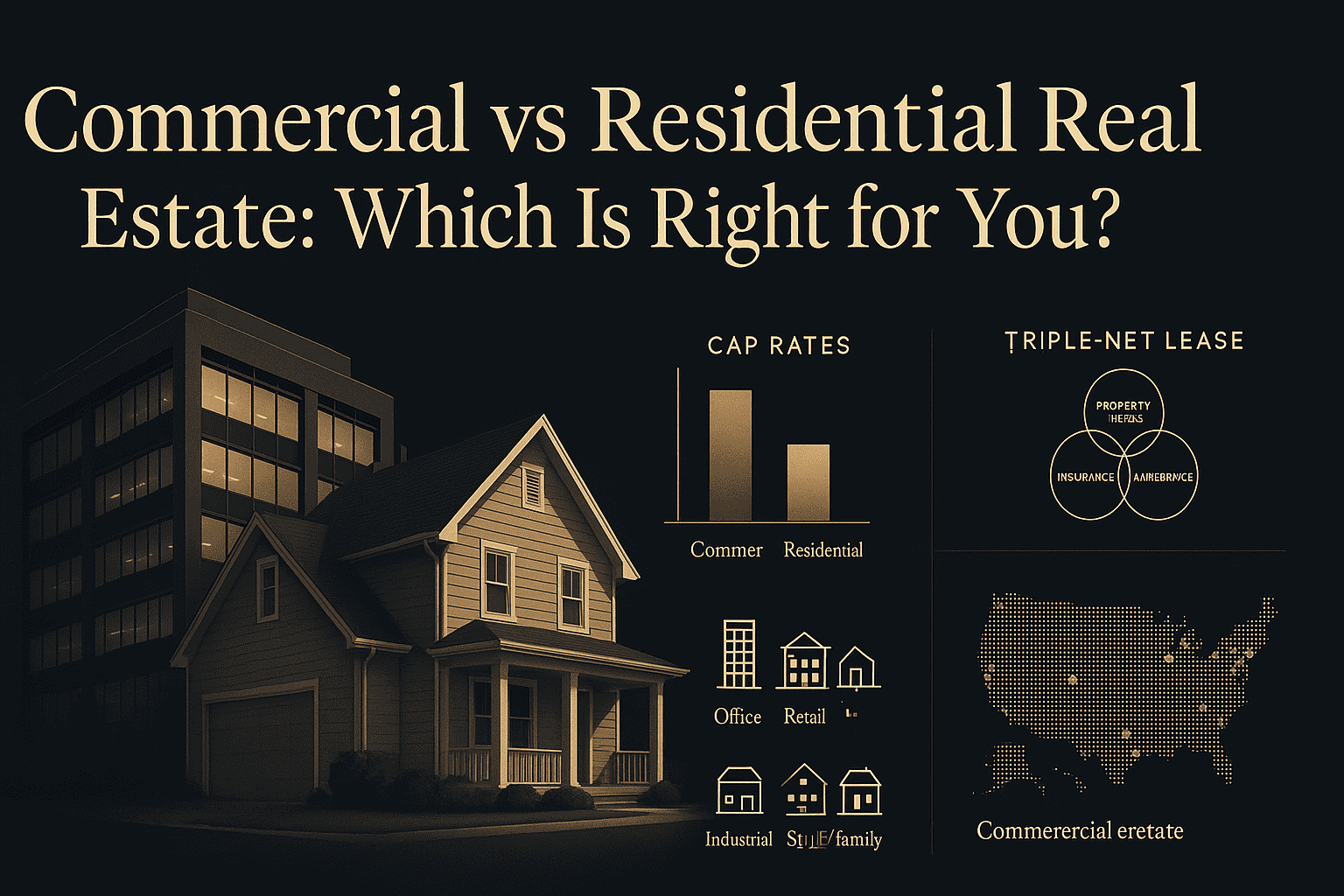
Commercial properties typically generate higher returns than residential investments. Cap rates (net operating income divided by property value) for commercial assets often range from 5% to 10% or more, depending on location and property type. Residential properties may yield lower cap rates, especially in competitive urban markets.
However, commercial returns come with greater complexity. Factors like market demand for office or retail space, local economic conditions, and tenant creditworthiness all play a significant role in performance.
2. Lease Terms and Tenant Stability
One of the most significant advantages of commercial real estate is lease length. Business tenants sign long-term leases — sometimes with options to renew — giving landlords reliable income over extended periods. Many commercial leases are structured as triple-net (NNN) leases, where the tenant covers property taxes, insurance, and maintenance costs, further reducing the landlord's operational burden.
Residential leases, while simpler to execute, typically last only 12 months. Turnover is more frequent, and landlords must manage ongoing re-leasing cycles, vacancies, and tenant screening.
3. Financing and Entry Costs
Commercial real estate requires significantly larger capital outlays. Down payments typically range from 20% to 35%, and lenders scrutinize the income-producing potential of the property rather than just the borrower's personal credit history. Financing terms can be more complex, often involving commercial mortgages with balloon payments or variable rates.
Residential financing is more straightforward. Government-backed loans, lower down payment requirements, and a broader lending landscape make it easier for individual buyers to enter the market with less capital upfront.
4. Market Volatility and Risk
Residential real estate is generally considered a more stable asset class. Housing demand is consistent — people always need places to live — and the market tends to be less sensitive to economic cycles than commercial property.
Commercial real estate, particularly office and retail, faced significant headwinds during economic disruptions like the COVID-19 pandemic. Remote work trends reduced office demand, while e-commerce pressured retail vacancies. That said, sectors like industrial and logistics real estate surged during the same period, illustrating the diversity within commercial markets.
5. Management Complexity
Owning and operating commercial properties typically demands more sophisticated management. Lease negotiations, zoning compliance, tenant improvement allowances, and property maintenance at scale all require either professional expertise or a dedicated property management team.
Residential properties are generally easier to manage, especially for smaller portfolios. However, as portfolios grow — particularly with multifamily units — the management complexity can rival that of commercial assets.
6. Tax Implications
Both asset classes offer attractive tax benefits, including depreciation deductions, mortgage interest write-offs, and 1031 exchange eligibility. Commercial properties often allow for accelerated depreciation through cost segregation studies, potentially delivering larger short-term tax advantages.
Residential investors also benefit from depreciation, though the schedules differ (27.5 years for residential vs. 39 years for commercial). Consulting a tax professional familiar with real estate is essential regardless of which path you choose.
Who Should Invest in Commercial Real Estate?
Commercial real estate is best suited for investors who:
- Have access to substantial capital or can pool funds through partnerships or REITs
- Seek higher income potential and longer lease stability
- Are comfortable with more complex due diligence and underwriting processes
- Want to diversify beyond residential holdings
- Have a longer investment horizon and can weather market cycles
If you're ready to explore opportunities in the US commercial market, browse our current commercial properties for sale to find assets that match your investment criteria.
Who Should Invest in Residential Real Estate?
Residential real estate tends to be the right fit for investors who:
- Are new to real estate investing and want a lower barrier to entry
- Prefer a more liquid asset that's easier to sell in most market conditions
- Want to leverage owner-occupied financing advantages
- Are building a rental portfolio gradually over time
- Prefer simpler management and more predictable regulatory environments
Can You Invest in Both?
Absolutely — and many sophisticated investors do. A diversified real estate portfolio that includes both residential rentals and commercial assets can balance income stability with growth potential. Residential properties provide consistent cash flow and easier liquidity, while commercial holdings can supercharge returns and deliver tax advantages at scale.
The key is aligning your property mix with your financial goals, risk tolerance, and available capital. Working with an experienced commercial real estate advisor can help you structure a portfolio that serves both short-term income needs and long-term wealth-building objectives. Learn more about how Cordura supports investors through every stage of the process by visiting our about Cordura page.
Final Verdict: Commercial vs Residential Real Estate
There is no universal "right" answer — the best investment depends on your unique circumstances. Here's a quick summary to guide your decision:
- Choose commercial real estate if you have significant capital, want higher yields, and are prepared for greater complexity.
- Choose residential real estate if you're starting out, prefer simpler financing, and want a lower-risk entry point.
- Consider both if you're an experienced investor looking to diversify and optimize your portfolio across asset classes.
At Cordura, our team specializes in helping US-based investors identify, evaluate, and acquire commercial real estate that aligns with their goals. Whether you're making your first investment or expanding an established portfolio, we're here to guide you every step of the way.
Ready to explore commercial real estate opportunities? Contact the Cordura team today and take the next step toward smarter property investment.