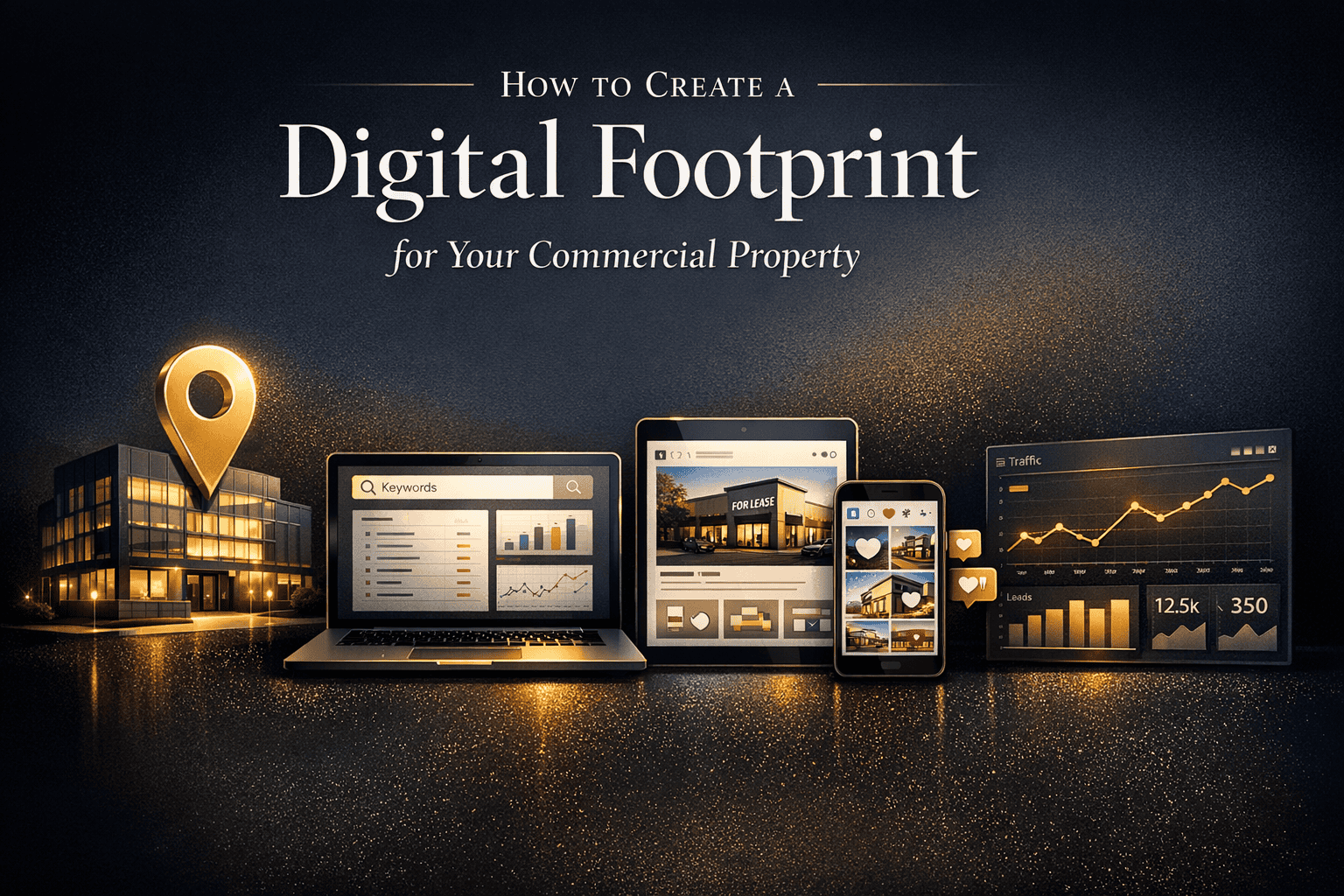

Commercial Real Estate Marketing: How to Attract Tenants and Buyers in Today's Market
In a competitive commercial real estate landscape, having a great property is only half the battle. The other half — arguably the more challenging half — is getting the right tenants and buyers through the door. Whether you're marketing a Class A office tower in Manhattan or a mixed-use retail strip in suburban Texas, your marketing strategy can make or break your leasing velocity and sale timeline.
At Cordura, we work with investors, property owners, and buyers across the US market every day. We've seen firsthand what separates properties that sit vacant for months from those that attract qualified leads within weeks. In this guide, we break down the most effective commercial real estate marketing strategies available today — from digital channels to relationship-driven outreach.
Why Commercial Real Estate Marketing Is Different
Commercial real estate marketing isn't the same as residential. The decision-making process is longer, the stakeholders are more sophisticated, and the financial stakes are significantly higher. A prospective tenant evaluating 20,000 square feet of office space isn't browsing casually — they have a specific set of criteria, a budget, a timeline, and often a team of advisors involved in the decision.
This means your marketing must be:
- Data-driven: Buyers and tenants want cap rates, NOI figures, traffic counts, and demographic data — not just pretty photos.
- Targeted: Broad campaigns waste budget. Effective CRE marketing reaches specific industries, business sizes, and investment profiles.
- Multi-channel: Decision-makers consume content across email, LinkedIn, search engines, and direct outreach. Your strategy must meet them where they are.
- Trust-building: Commercial transactions require trust. Content, testimonials, and case studies matter enormously.
1. Build a High-Converting Property Listing Page
Your property listing is your digital storefront. A weak listing — blurry photos, vague descriptions, missing data — signals unprofessionalism to sophisticated buyers. A strong listing, on the other hand, can generate inbound leads on autopilot.
What Every CRE Listing Must Include
- Professional high-resolution photography and drone aerials
- Interactive floor plans or 3D virtual tours
- Detailed specifications: square footage, ceiling heights, loading docks, zoning, parking ratios
- Financial highlights: asking price or lease rate, NOI, cap rate, occupancy history
- Location data: proximity to highways, transit, labor pools, and amenities
- A clear, compelling call-to-action with a contact form or scheduling link
Properties listed on Cordura benefit from optimized listing templates designed to convert serious inquiries. If you're ready to list your asset, explore our property listing options to maximize your exposure to qualified buyers and tenants.
2. Invest in Search Engine Optimization (SEO)
When a business owner types "office space for lease in Austin" or "industrial warehouse for sale in Dallas" into Google, you want your listing — or your brokerage — to appear at the top of the results. That's the power of SEO.
Local SEO for Commercial Properties
Local SEO is especially powerful for CRE because most tenants and buyers search geographically. Optimize your content and listings for location-specific keywords such as:
- "[Property type] for lease in [City, State]"
- "Commercial real estate [City] [Neighborhood]"
- "[Square footage] office space [ZIP Code]"
Make sure your Google Business Profile is claimed, complete, and regularly updated. Encourage satisfied clients to leave reviews — social proof matters even in B2B real estate.
Content Marketing and Blogging
Publishing educational content — market reports, neighborhood guides, investment analyses — establishes your authority and drives organic traffic. Blog posts targeting long-tail keywords like "how to evaluate a commercial lease" or "best submarkets for industrial investment in Phoenix" attract decision-makers early in their research phase, giving you a first-mover advantage.
3. Leverage Commercial Real Estate Listing Platforms
Getting your property in front of the right audience requires distribution across multiple platforms. While your own website is essential, syndication to major CRE listing platforms dramatically increases your reach.
Top Platforms to Consider
- CoStar: The dominant platform for brokers and institutional investors. High cost but massive reach.
- LoopNet: CoStar's consumer-facing platform, widely used by small business owners seeking space.
- Crexi: A growing marketplace popular for investment sales, with strong data tools.
- Cordura: Our platform connects property owners directly with investors, tenants, and buyers across key US markets, with optimized search tools and verified inquiries.
- Showcase.com and CityFeet: Niche platforms with strong traffic in specific property types and markets.
Cross-listing your property ensures you're not missing leads who only search on one platform. Think of it as casting a wider net without duplicating your marketing effort significantly.
4. Use Email Marketing to Reach Active Investors and Tenants
Email remains one of the highest-ROI channels in commercial real estate marketing. Unlike social media algorithms, email delivers your message directly to a curated audience that has opted in to hear from you.
Effective CRE Email Campaigns
- New Listing Announcements: Send immediately when a property hits the market. Include the key financials, a compelling subject line, and a single clear CTA.
- Market Update Newsletters: Monthly or quarterly updates on absorption rates, rental trends, and investment activity position you as a market authority.
- Drip Campaigns for Leads: Prospects who download a brochure or inquire but don't convert immediately should enter an automated email sequence that nurtures them over weeks or months.
- Deal Closing Announcements: Sharing successful transactions builds credibility and keeps your network engaged.
Segment your email list by property type interest, geography, and investor profile to ensure every recipient receives relevant content. Personalization dramatically improves open and click-through rates.
5. Harness the Power of Social Media and LinkedIn
Social media in CRE is no longer optional. LinkedIn, in particular, has become the go-to platform for commercial real estate professionals to network, share listings, and build authority.
LinkedIn Strategy for CRE Professionals
- Share market insights, deal announcements, and property walkthroughs
- Publish long-form articles on investment trends and market analysis
- Engage with posts from potential tenants, investors, and local business leaders
- Use LinkedIn Sales Navigator to identify and connect with target tenant industries
- Run targeted LinkedIn Ads to reach CFOs, COOs, and business owners by company size and industry
Instagram and YouTube for Property Visualization
Instagram Reels and YouTube videos are increasingly effective for showcasing commercial properties visually. A well-produced property walkthrough video — even one filmed on a smartphone with good lighting — can generate significant engagement and shares. For mixed-use, retail, and hospitality properties especially, visual storytelling drives emotional connection with prospective buyers.
6. Deploy Paid Digital Advertising
While organic strategies build long-term momentum, paid advertising delivers immediate visibility. A well-managed paid campaign can put your property or services in front of highly qualified prospects within hours of launch.
Google Ads for Commercial Properties
Search ads targeting high-intent keywords — like "office space for lease downtown Chicago" — capture prospects who are actively searching right now. These campaigns can be geo-targeted, scheduled during business hours, and optimized based on conversion data.
Retargeting Campaigns
Most prospects don't convert on their first visit. Retargeting ads follow website visitors across the web, keeping your property top-of-mind as they continue their research. This is a cost-effective way to re-engage warm leads who showed initial interest but didn't inquire.
Programmatic Display Advertising
Programmatic advertising allows you to target specific business types, income brackets, and behaviors with display ads. For example, you can serve ads specifically to manufacturing companies in a target radius of an industrial park you're marketing.
7. Build and Nurture Your Broker Network
In commercial real estate, relationships are the ultimate marketing channel. A strong broker network can bring you qualified tenants and buyers before a property even hits public listing platforms.
How to Strengthen Broker Relationships
- Host broker open houses and property tours with food, beverages, and detailed tour packages
- Offer competitive and transparent co-broke commission structures
- Communicate proactively — brokers recommend properties from owners who are easy to work with
- Stay top-of-mind with a regular broker newsletter featuring your available inventory
- Attend CCIM, SIOR, and ICSC events to expand your professional network
Understanding the fundamentals of commercial real estate investment helps you speak the language of both brokers and their investor clients, making every conversation more productive and trust-building.
8. Create Compelling Marketing Materials
Even in the digital age, high-quality print and PDF marketing materials remain essential in CRE. Offering brokers and prospects a professionally designed property brochure signals that you take your asset — and their time — seriously.
Essential CRE Marketing Collateral
- Offering Memorandum (OM): For investment sales, a detailed OM covering financials, market analysis, tenant profiles, and investment thesis is non-negotiable.
- Property Brochure: A visual, concise summary of key specs and highlights for lease or sale prospects.
- Site Plan and Floor Plans: Essential for tenants evaluating fit-out potential.
- Market Report: A third-party or in-house submarket analysis that contextualizes the investment opportunity.
- Aerial and Location Maps: Highlight proximity to key demand drivers, transit nodes, and infrastructure.
9. Use Data and Analytics to Refine Your Strategy
What gets measured gets improved. Tracking the performance of your marketing campaigns allows you to double down on what works and eliminate what doesn't.
Key Metrics to Track
- Listing page views and time on page
- Inquiry and brochure download conversion rates
- Email open rates, click-through rates, and unsubscribes
- Cost per lead from paid campaigns
- Broker inquiry sources and deal origination tracking
- Days on market compared to submarket average
Use tools like Google Analytics, your CRM, and platform-native dashboards to build a clear picture of your marketing funnel. Regular reporting — even monthly — surfaces insights that can dramatically shorten your leasing or selling timeline.
10. Highlight Tenant and Buyer Success Stories
Social proof is a powerful conversion tool in commercial real estate. Case studies, testimonials, and deal spotlights demonstrate real-world results and build trust with skeptical prospects.
Feature tenant success stories that highlight how your property helped a business grow. For investment properties, share buyer testimonials that quantify returns achieved. These stories humanize your brand and make abstract financial metrics tangible and believable.
At Cordura, we help property owners and brokers showcase their track record to a verified audience of active investors and tenants. Connect with our team to learn how we can amplify your commercial real estate marketing efforts across our platform and network.
Bringing It All Together: A Coordinated Marketing Strategy
The most effective commercial real estate marketing strategies don't rely on a single channel. They combine organic search, paid advertising, email outreach, broker relationships, social media, and high-quality content into a coordinated system where each channel reinforces the others.
Here's a simplified framework to get started:
- Weeks 1-2: Build your listing page, professional photography, OM or brochure, and email announcement
- Week 2: Distribute across listing platforms, launch Google Ads, and send broker announcement email
- Weeks 3-4: Activate social media content, launch retargeting campaigns, host broker open house
- Month 2+: Publish supporting blog content, run drip email sequences, analyze performance data and adjust
Consistency and follow-through are what separate successful CRE marketers from those who wonder why their phones aren't ringing. The market rewards those who show up — professionally, persistently, and strategically.
Final Thoughts
Commercial real estate marketing has never been more sophisticated — or more rewarding for those willing to invest in it. By combining digital tools with relationship-driven strategies and compelling property presentation, you can dramatically reduce days on market, attract higher-quality tenants, and achieve better pricing outcomes for your assets.
Cordura is built to support every stage of that journey — from listing your property to connecting with verified buyers and tenants across the US. Start applying these strategies today and experience the difference a professional, multi-channel approach makes to your commercial real estate results.