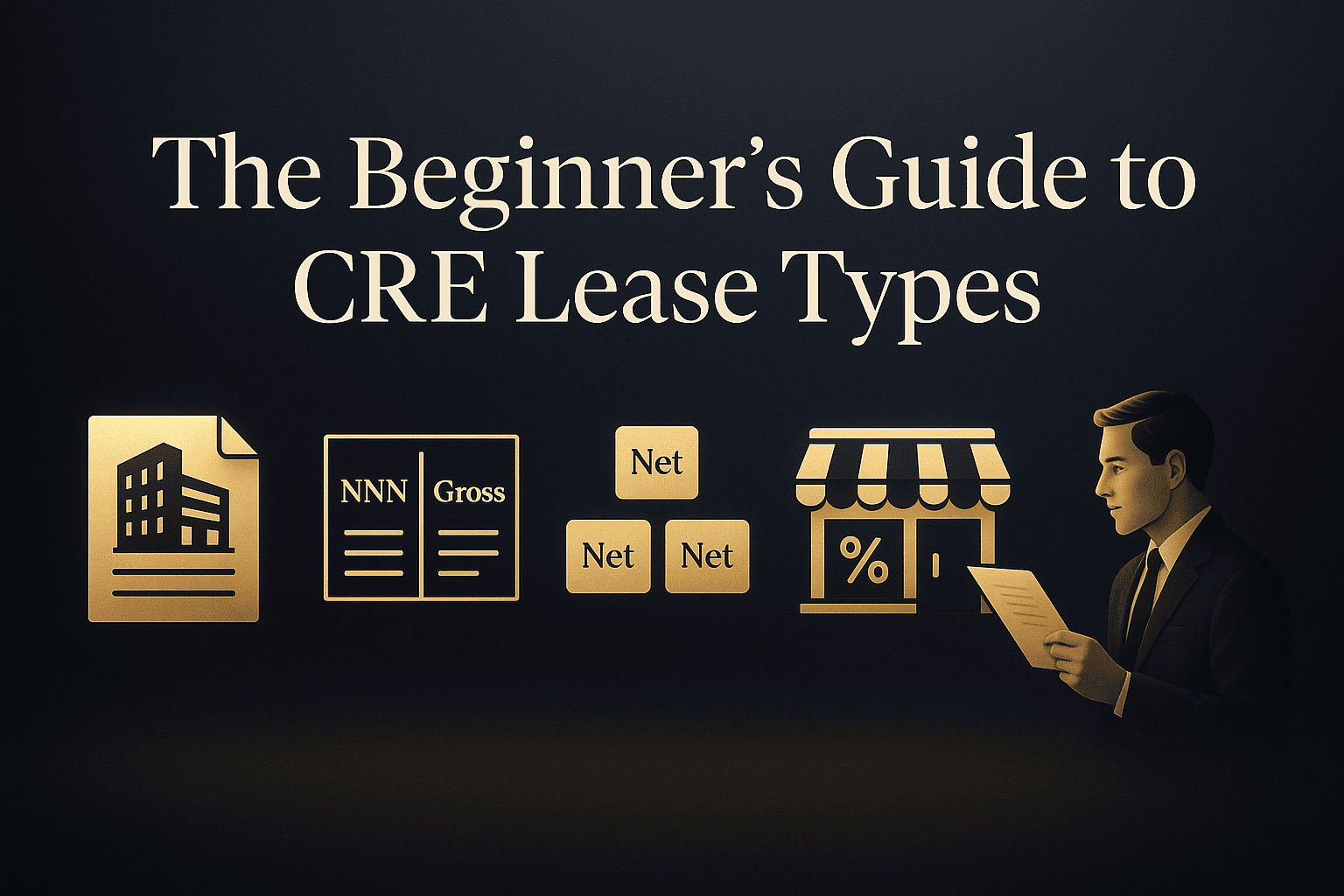
The Beginner's Guide to CRE Lease Types
If you're new to commercial real estate (CRE), one of the first concepts you'll need to master is understanding lease types. Unlike residential leases — which tend to follow a straightforward rent-per-month model — commercial leases come in several distinct structures, each with its own implications for both landlords and tenants. Choosing the right lease type can significantly impact your cash flow, risk exposure, and long-term investment returns.
At Cordura, we help investors, buyers, and property seekers navigate the complexities of the US commercial real estate market. In this beginner's guide, we'll break down the most common CRE lease types, explain how they work, and help you determine which structure aligns best with your goals.
Why Lease Structure Matters in Commercial Real Estate
Before diving into specific lease types, it's important to understand why the structure of a commercial lease matters so much. The lease agreement defines who is responsible for paying which operating expenses — things like property taxes, insurance, maintenance, and utilities. Depending on the lease type, these costs can fall entirely on the landlord, the tenant, or be split between both parties.
For investors, the lease structure directly affects net operating income (NOI) and overall asset valuation. For tenants, it determines predictability of monthly costs and financial risk. Understanding CRE lease types is foundational knowledge whether you're exploring commercial real estate investing for the first time or evaluating a new property acquisition.
The 4 Main Types of Commercial Real Estate Leases
1. Gross Lease (Full-Service Lease)
A gross lease is the simplest lease structure for tenants. Under this arrangement, the tenant pays a single, all-inclusive rent amount, and the landlord is responsible for covering most or all of the property's operating expenses — including property taxes, building insurance, and maintenance costs.
- Best for: Tenants who want predictable monthly costs
- Landlord risk: Higher — operating expense increases come out of the landlord's pocket
- Tenant risk: Lower — fixed rent provides financial predictability
- Common in: Office buildings and some retail spaces
A variation of the gross lease is the Modified Gross Lease, which splits some operating expenses between the landlord and tenant. For example, the tenant might pay for their own utilities while the landlord covers taxes and insurance. This hybrid structure offers more flexibility and is very common in multi-tenant office buildings.
2. Net Lease
Net leases shift more financial responsibility to the tenant. There are three primary subtypes: Single Net (N), Double Net (NN), and Triple Net (NNN) leases — each adding another layer of expense responsibility for the tenant.
Single Net Lease (N Lease)
In a single net lease, the tenant pays base rent plus their share of property taxes. The landlord typically covers building insurance and maintenance costs. This type is relatively uncommon in commercial real estate today.
Double Net Lease (NN Lease)
A double net lease requires the tenant to pay base rent, property taxes, and building insurance premiums. The landlord remains responsible for structural maintenance and repairs. This structure is more common than single net leases and is often found in multi-tenant retail and office properties.
Triple Net Lease (NNN Lease)
The triple net lease — often abbreviated as NNN — is one of the most popular lease structures in commercial real estate, particularly for investors. Under a NNN lease, the tenant assumes responsibility for base rent plus all three major expense categories: property taxes, building insurance, and maintenance costs (including repairs and sometimes even structural elements).
- Best for: Investors seeking passive, predictable income
- Landlord risk: Very low — minimal management responsibilities
- Tenant risk: Higher — responsible for operating cost fluctuations
- Common in: Freestanding retail (pharmacies, fast food, banks), industrial properties
NNN leases are highly attractive to investors because they typically feature long-term commitments (10–25 years), creditworthy national tenants, and minimal landlord obligations. If you're researching NNN lease properties for sale, understanding this structure is essential before making an offer.
Absolute Net Lease vs. Triple Net Lease: What's the Difference?
You may also encounter the term Absolute Net Lease (also called an Absolute NNN). While similar to a standard NNN lease, an absolute net lease goes one step further — the tenant is responsible for literally every expense associated with the property, including roof repairs, structural damage, and even rebuilding the property if it's destroyed. This is the most landlord-friendly lease structure available and is common in sale-leaseback transactions with investment-grade tenants.
Percentage Lease
Common in retail environments — especially shopping malls and lifestyle centers — a percentage lease requires the tenant to pay a base rent plus a percentage of their gross sales revenue above a specified threshold (called the "breakpoint").
- Base rent: A fixed monthly amount regardless of sales performance
- Percentage rent: Additional rent triggered once sales exceed the breakpoint
- Best for: Retail landlords who want to share in tenant success
- Common in: Shopping centers, malls, and high-traffic retail corridors
For example, if a retail tenant has a breakpoint of $500,000 in annual sales and a percentage rate of 5%, any sales above $500,000 would result in additional rent payments to the landlord. This structure aligns landlord and tenant incentives — both parties benefit when the tenant performs well.
Ground Lease: A Unique Long-Term Structure
A ground lease is a long-term lease (typically 50–99 years) in which a tenant leases the land only and constructs or owns any improvements (buildings) on it. At the end of the lease term, the land — along with any improvements — typically reverts back to the landowner.
- Best for: Landowners who want to retain ownership while generating income; developers who want to avoid large land acquisition costs
- Common in: Urban commercial developments, hotels, mixed-use projects
- Key consideration: Financing can be more complex for tenants under ground leases
How to Choose the Right Lease Type
Selecting the appropriate lease type depends on your role — investor, landlord, or tenant — and your specific financial objectives. Here are some guiding principles:
- Investors seeking passive income: NNN or Absolute Net leases offer the lowest management burden and most predictable cash flow.
- Investors willing to manage properties: Gross or modified gross leases can command higher rents and offer more control.
- Tenants wanting cost certainty: A gross lease minimizes exposure to rising operating costs.
- Tenants with strong sales performance: A percentage lease can sometimes result in lower base rent obligations.
- Developers wanting to minimize upfront capital: A ground lease can preserve capital for construction and improvements.
Always consult with a qualified commercial real estate attorney and broker before signing any lease agreement. Lease terms are negotiable, and having expert guidance can save you thousands of dollars over the life of the agreement.
Key Lease Terms Every Beginner Should Know
Beyond lease types, there are several important terms you'll encounter in any commercial lease negotiation:
- Base Rent: The fixed rent amount before any additional charges
- Common Area Maintenance (CAM): Fees covering shared spaces like lobbies, parking lots, and hallways
- Rent Escalation Clause: A provision that increases rent periodically, often tied to CPI or a fixed percentage
- Tenant Improvement Allowance (TIA): Funds provided by the landlord to help the tenant customize the space
- Lease Term: The duration of the lease agreement
- Renewal Option: The tenant's right to extend the lease at pre-agreed terms
- Personal Guarantee: A legal commitment by an individual (often the business owner) to fulfill lease obligations if the business cannot
Common Mistakes Beginners Make with CRE Leases
Even experienced professionals can make costly mistakes when navigating commercial leases. Here are the most common pitfalls beginners should avoid:
- Not reading the full lease: Commercial leases can be 30–100 pages long. Every clause matters.
- Underestimating operating expenses: In NNN leases, unexpected repairs or tax increases can significantly impact costs.
- Ignoring CAM reconciliation: Many tenants don't realize CAM charges can be adjusted annually based on actual costs.
- Skipping professional advice: Always work with a qualified CRE broker and attorney.
- Overlooking exit clauses: Understand your options if you need to exit the lease early.
How Cordura Can Help You Navigate CRE Leases
Whether you're a first-time investor evaluating a NNN property, a business owner searching for office space, or a seasoned buyer exploring portfolio diversification, understanding lease structures is non-negotiable. The right lease can be the difference between a thriving investment and an underperforming asset.
At Cordura, our team of commercial real estate experts is here to guide you through every step of the process — from identifying the right property type to negotiating favorable lease terms. Contact our team today to speak with a CRE specialist who can help you make informed, confident decisions in the US commercial real estate market.
Final Thoughts
Commercial real estate leases are far more nuanced than their residential counterparts, but understanding the basics empowers you to make smarter investment and business decisions. From the simplicity of a gross lease to the investor-friendly structure of a triple net lease, each type serves a distinct purpose in the CRE ecosystem.
Take the time to understand each structure, evaluate your risk tolerance, and work with experienced professionals who can guide you toward the lease type that best aligns with your long-term goals. With the right knowledge and the right team, commercial real estate can be one of the most rewarding asset classes available to investors today.